Animals Talk, We Should Listen

Animals Talk, We Should Listen

article

by Napecincala (Little Paws)

The early autumn air lay cold and damp around me as I tried to find a comfortable spot in my blanket. I had been in this pit for two days with no food and no water, but no vision came despite hours of singing and praying. I leand up against the wall and rested my back. I was tired and hungry and very thirsty, but I remained standing and stared at one of the fruit wood poles that my prayer ties were hung on. A little black spider started to spin a web between the pole and the string of my ties. It worked very quickly. I watched the operation, entranced by the beauty of the design and the opalescent colors that danced off the thread in the early morning light. It was beautiful when it was done. Then she crawled up the web and waited at the place where it was attached to the pole.

I stared up at the sky, and as the morning progressed the air warmed the dirt around me. The pit transformed from a cool retreat to an earthen oven. I pulled my star blanket over my head to keep off the biting deer flies. Only my blanket-clad head could be seen above ground by the helpers who periodically came to check on me. They did not speak to me, and I supposed they just came up to make sure I was still breathing.

Every once in a while I would look down at the web, but the spider had not caught any breakfast that I could see. A rabbit, unaware of my presence within a circle of prayer ties, hopped out from behind a rock and started to nibble on the fruit I left for the spirits. Crows called to each other, and butterflies, attracted by the bright colors of the prayer ties, would light on the string, searching futilely for the way in to the nectar of this strange, red cloth flower.

A large vulture soared on the warm updrafts above until it spotted a potential meal and disappeared over my diminished horizon. An hour or so later he was circling above me again. I kept thinking he was just waiting for me to die so I could be the next blue plate special. I held my pipe in my hands and sang prayer songs one after another in a high keening voice, begging for a vision.

As evening approached, bats performed amazing acrobatics above my head, hunting the wretched mosquitoes that had plagued me for nearly four days. I welcomed them and watched them dance in the gloaming. Even with all the mosquitoes in the air, the little spider still waited at the end of its web for a meal.

Stars lit up the prairie sky one at a time as darkness descended. I heard the scuffle of some ground animal behind me, though I never saw the passing porcupine. Only her tracks in the dust attested to the visit.

I woke that morning to a vision of diamonds suspended from the spider’s web. Morning dew and gray light formed a beautiful sculpture. Still the spider waited, and nothing disturbed the perfect form of the web. When the helpers came to take me out of the pit, I was weak with hunger and angry. In four days I had not been granted a vision. During the sweat lodge afterward the medicine person asked me what I had seen.

“Nothing,” I replied.

I could hear the smile in his voice as he asked, “So you were sleeping with your eyes open?”

“No, grandfather, what I meant to say was that I didn’t have a vision.”

“Oh,” he said across the darkness, “So you did see something while you were up there.”

Then I talked about the spider and the crows, the rabbit and the porcupine, the butterflies on the line. I described in detail how I felt and what I was thinking about, but I am sure he could hear the bitterness and disappointment in my voice. I had prayed and fasted for four days for a vision and spirit helpers, and it felt like it was all for nothing.

“Did the spider ever catch anything?” he asked.

“No.” I replied. It was the only part of my time “On the hill” that he asked about.

When we were all done and I was readying to leave, a woman helper came up and said that it takes a long time for most human beings to understand why things happen the way they do.

“We don’t really live in a fast food world, you know.”

Months later I began to understand that my time on the hill had given me everything I asked for.

*************

The above story is a parable, pure fantasy, a modern re-telling of an old Lakota story designed to teach something about the error of expectation and the need for patience when seekers are trying to learn from the natural world.

The reason I chose to write this parable in this way is because most white people walking the red road (learning about Native American spiritual beliefs) have a similar experience when they start out. I certainly did. More importantly, speaking in detail about personal visions and spirit helpers is a little like talking in detail about your sex life. It is usually more information than anyone has the right to know about you, or wants to know.

Like most people raised in a Christian culture, I came to the ceremony of “hanblecia,” crying for a vision, with all kinds of preconceived notions about what a vision was and how it would come to me. My pagan ideas also came into play, as I imagined animal spirit helpers as more like familiars that I could command than teachers I could learn from. Perhaps the most limiting expectation that I had was that I would be given an “important” animal spirit, like an eagle or a wolf or a bear. So, when my spirit helpers showed themselves to me, I didn’t see them, because I was not looking for them in the context in which they appeared.

My day-to-day world is bound by “clock time,” which is faster than Nature’s time, and “computer time,” which is so fast that I can’t even perceive it. As I contemplated my own hanblecia I began to see that time is a key to being able to listen to the animals. Lots of questions came to mind in the weeks following. Does a stone live on the same time as a hummingbird? Do daytime animals perceive time in the same way that nocturnal animals, like bats and porcupine, do? Why is it that most vision seeking ceremonies impose such difficult physical demands? What the Elder lady was trying to say, at the end of my story, was that Unci Maka (Grandmother Earth) has no respect for human concepts of time. We do not really live in a fast food world, and a real connection to Nature’s spirits requires that the human being accommodate them, by slowing down and focusing.

As in the Christian tradition, Lakota stories say than humans were the last thing to be created. But rather than being superior to everything, man was decidedly inferior. All the animals stood around First Man and First Woman and laughed and cried at how pitiful these naked things were. They had no fur to keep them warm, no teeth and no claws to feed themselves and they had nothing to offer the other animals in return for knowledge. Coyote laughed so hard at the sight of them that he died of it. Almost by accident, First Woman stepped over his prostrate body and brought him back to life. In his gratitude, Coyote begged the Great Mystery to do something to help these pitiful creatures. He thought that if they just died it would be better than the miserable short existence that they were in for.

Wakantanka had another idea. He created a plant, tobacco, and gave it exclusively to human beings. He also made the every spirit in nature long for the taste and smell of it, but the only way they could get it was if human beings offered it to them. So it was that human beings learned from animal spirits and other spirits in the world how to live.

I love this story because it clearly says that we needed the spirits in order to live. They did not need us. It is only with offerings of tobacco and a certain amount of humility that they are willing to reveal themselves to us. This was the purpose of the hundreds of red prayer ties I made in preparation for my ceremony.

In my fable, though, I did not have a vision in the way I expected. Rather the actual animals appeared in my world and demonstrated through their actions what I needed in order to live. The spider demonstrated careful construction and patience. The rabbit showed a certain amount of courage to come out into the open when it knew predators were still around, that there is a certain risk involved in really living. The porcupine taught me that I could figure out what was going on around me by simply opening my eyes and seeing the evidence. The vulture spoke to me of the opportunities to grow and change that death sometimes represents. The crows talked to each other and helped each other by sharing information. The butterfly reminded me that there is beauty in persistence. Even when it won’t get you what you want, it makes you stronger. The bats taught me flexibility and the immense power of listening carefully.

None of this interpretation came out of a book and the holy person who was assisting me did not even attempt to interpret what happened to me on the hill. He did stress, by his silences and later his questions, that while I could not control the things that happened, I certainly did control what they meant. It was my responsibility to find the meaning in the ceremony, not his. On reflection, I could tease out the lessons that all these helpers had given me. None of them were glamorous or particularly powerful medicine, but each brought me a lesson I needed at that time.

He also brought the spider back into my awareness with his question. “Did the spider ever catch anything?” When I thought about it later, I came to understand that just because I had done all the ceremony in the right way, at the right time and with the right materials, it did not guarantee that I would “catch” anything. And in another way, my answer had been wrong. The spider did catch something. It caught my attention. In those few minutes that it was spinning its trap, I was transported. I felt no hunger and no thirst. Time stopped as I gazed in awe at the beauty of the thing. I was listening and they were speaking in the language of symbols. Those moments, when time was suspended — that was my vision.

Bad Kitty Chooses and Trains Her Witch…

Bad Kitty Chooses and Trains Her Witch…

story

by L. Lisa Harris

The candles were lit, as the heavy scent of incense caressed the air. “We all come from the Goddess” was playing softly in the background as we passed energy hand to hand to cast our circle. Deities were invoked, and quarters were called with poetry and passion. Out of the corner of my eye, I caught a movement as a furry black paw reached out from under the altar cloth and snatched my ritual candle lighter. The familiar strikes again.

The day before last Thanksgiving, I had an overwhelming urge to adopt a kitten. It wasn’t planned out. It wasn’t even rational. I needed a cat and I needed it that day. After we bought our house, we had discussed adding a new pet to our family some time in the future, but had made no immediate plans. As a matter of fact, my dear husband had not actually agreed to it. I rationalized my impulse by telling myself that since our whole family would be home for four days, it would be the perfect time to bring a new family member into the household, especially since the smell of roasting turkey is so welcoming. Visions of our happy family playing with a cute, fluffy frolicking kitten filled my mind. It was time; hubby would come to see that once the cute little fluff ball snuggled up to him and purred.

I picked up the phone and called the local Petsmart adoption center. I was in luck, an organization called “Spaying To Save Our Pets” had several cats and kittens up for adoption, but I would have to get there before 1:00 p.m., as they were going to be packed up and taken back to the shelter for the four-day holiday. I took an early lunch and headed up to South Hill to see the kittens. When I arrived there was quite the display of meowing, yowling, tumbling and cuteness.

These cats knew that they were “auditioning” and were hamming it up good. It was almost sensory overload.

My eyes went immediately to an older kitten, about six months old, with long silky black fur and penetrating amber eyes. I knew that my husband and daughter liked very young kittens with short hair, and that hubby would have a fit if I brought home a cat whose fur clashed with our white carpet. My dear husband has what I consider to be an unnatural attraction to vacuuming and takes great pride in making each nap of the carpet stand at attention, spotless and clean. He’d freak out if I brought home a cat with long black fur just waiting for the opportunity to shed all over the place. I tried to ignore her and find something interesting, or attractive about the babies and shorthaired cats, but I kept returning to those big amber eyes, that penetrating stare that said, “You want me.”

“It wouldn’t be fair for me to pick the cat I like, just because she looks like a `witchy kitty’; this is a family pet.” I told myself. Kitty had other ideas.

After the other cats and kittens got done making fools of themselves or completely ignoring me, my eyes returned to the black kitty. She calmly sat in her cage, regal and oblivious to the hubbub going on around her. With her head held high and her fluffy tail gracefully circling her perfect little paws, she let out three dignified, soft, throaty mews, then reached her paw out of the cage and put it on my arm as if to say, “You may pick me up and hold me now.” I asked the clerk if she could get the kitten out so that I could hold her and she instantly began to purr and snuggle. I was hooked. When I looked at the tag on her cage, I noticed that her name was “Sabrina,” a fine witch name. She had been brought back earlier that very day.

The adoption center people wanted to make sure that we didn’t have a dog, as she had been returned for “beating up” a Yorkshire Terrier in her previous home. I had to respect a tough kitty and considered myself fortunate to have had the urge to come adopt a cat the same day that this fabulous creature had been brought back in.

She bewitched the rest of the household in short order, and I began to wonder if she would become my familiar. She loved the whole family, but attached herself to me quickly and completely. She could not sleep unless it was on or in my face, and I was not allowed any unauthorized or unsupervised trips to any other room in the house, especially the bathroom. It became apparent that I had acquired a fluffy shadow.

She was attracted to anything magickal, and had a weird thing going with my Witch Barbie’s familiar. She would jump up on the dresser at night and steal her little gray plastic cat, as if to say, “I’m the only familiar in this house and don’t you forget it!” I soon found that she had a collection of sacred items, including one of my rune stones stashed under the altar in our bedroom. It didn’t take her long to earn the nickname “Bad Kitty.” One afternoon I came home from work to find her sitting in the middle of the small Brigid wheel on the living room altar as if to say, “I’m magick.” She somehow managed to jump from the floor, over a circle of seven-inch taper candles, into a space of less than 12 inches, without knocking a single candle out of place. I have no idea how she did that, but she was quite proud of herself.

The first time I cast a circle in her presence, to charge some herbs for witch balls I was making my coven members for Yule, she went crazy (more so than usual), tearing in and out of the bedroom and creating a ruckus. Finally, as she was taking a short breather, I yelled down the hall at her, “If you want to be my familiar, get your furry little butt in here and help, otherwise go harass someone else. I’m busy.” She stuck her nose and tail in the air as if to say, “It’s about time you offered me a proper invitation” and sauntered into the bedroom and sat next to the altar concentrating on my work, only occasionally taking a break to lick herself. Once she was formally recognized, she left Witch Barbie’s kitty alone, as it apparently posed no further threat to her status.

From that point on, it was apparent that I had a certified “energy junkie” on my hands. At our monthly coven meetings, she simply must be in the middle of the circle as it is being cast. She bounced off the walls for three days after “attending” her first circle. She has since learned to ground her excess energy. There is to be no magick in the house without Bad Kitty being in the middle of it. She will only leave a circle if drums are bought out, and only for as long as the noise is going on. She is able to slip in and out of the circle without actually breaking it.

I do a lot of magikal work involving meditation and visualization in the bathtub, as it is the only place in the house that I can get any quiet and privacy. One night, as I was meditating in the tub with my eyes closed, I felt a “furry presence.” Bad Kitty had let herself into the bathroom and was perched on the edge of the tub with her front paws on my shoulder, her face right in mine, and her bushy tail dangling in the herbal water. She and I were sharing breath, and much to my surprise, energy. I could feel that the circle was stronger after she entered it.

Bad Kitty is in transition from silly kitten to serious magikal partner. We spend a bit of time each day working on our physic communication. We play a little game where one of us pictures in our mind’s eye, what we would like the other to do. It works about 85% of the time. She often uses this skill to argue over when and what she’s being fed. When she’s not filling my life with trickster energy, she’s actually helpful magickally. At rituals held in my home, she will often feel and fill an energy gap in the circle. If someone is distracted, uncomfortable or for some other reason is not moving energy as well as they normally would, she sits just behind them as if to fill in the gap. Several of us have felt the circle strengthen when she has done this.

Unfortunately, she is still young, at just over a year old, and definitely has her moments when she’s an unfocused, obnoxious adolescent. I was recently working a seven-day spell for something extremely important, and discovered that she is up for no more than three days in a row of any single working. The first three days, she could sense me getting ready to do the work and enthusiastically supervised my preparations, lent her energy during the actual working and served as guardian. On the fourth day she couldn’t decide if she wanted to be involved or not and grudgingly entered the bathroom with me. On day five I picked her up and carried her into the bathroom with me, thinking, “I started this working with the cat, I should complete it with the cat.” After that, I realized that no familiar is better than a bored familiar and let her off the hook for the rest of the working.

The more we work together, the more I discover how powerful the magikal connection we share really is. I often wonder why I had the overwhelming need for a cat at the exact moment I did. I would like to think of myself as a humanitarian who “rescued” a homeless kitty from a shelter. But we all know that I was merely the pawn of a cat looking for her own “pet witch”.

Animal Spirit Guides Enlighten Us

Animal Spirit Guides Enlighten Us

article/story

by Shiela Baker and Kim Pearson

We all have spirit guides. Very often these guides take animal forms. Animal spirit guides live deep within our universal unconscious, our subconscious minds and in the relationships between us as souls. The practice of shamanism offers a way to connect deeply with the wisdom and guidance of these creatures.

Shamanism and Animal Spirit Guides

In shamanism, our spirit guides are the protectors, the witnesses and the pathfinders. They are the shaman’s primary helpers in facilitating healing. Shamans have strong relationships with their guides that are continually reinforced in journeys taken together. These interactions are the basis for shamanism and the foundation for the power of the shaman. As in any intimate relationship, they are intense, emotional and sometimes fraught with danger.

Our ancestors lived in close relationship with all forms of nature. They interacted with the environment and shared this knowledge. In shamanic journeys, I have found the ability to reclaim my ancestral heritage and to commune with these carriers of deep knowing, most of whom are animals. Communing with these animal guides during journeys has taught me about my passion for life, about right action and right timing and even about right communication.

Lessons From Your Power Animal

Finding your power animal is one of the great treasures of life. Animals come as guides and protectors, and of course as teachers. One of my favorite stories is of a guide who is large and has small feet. One day, while on a shamanic journey, we were wading in a river and I was complaining about the cold water, the slippery rocks and a multitude of other picky things. My guide head-butted me with his enormous head, sending me flying to land in the frigid water. Gasping, I got up and looked at him in astonishment. He looked back at me and said, “How big are my feet and how much do I weigh? And how big are your feet and how much do you weigh?” I understood the point. My esteem and respect for him increased greatly that day. Animal guides have much to teach us, and not always gently. Animals are powerful metaphors for the medicine of the lessons our soul has come to learn and heal.

Totems and Clans

Guides are also known as animal totems and power animals. A totem is an object, usually an animal or plant (or all animals or plants of that species), that is revered by members of a particular tribe or clan because of a mystical or ritual relationship that exists between the totem and that group. Generally, the members of the group believe that they are descended from the totem ancestor, or that they and the totem are “brothers.” In the case of a clan, descent is traced to a male or female common ancestor. Such groups have been known in all parts of the world and include some that claim the parentage or special protection of an animal, plant or other object. They also include such familiar groups as the Highland clans of Scotland (the English word clan comes from Gaelic). Most clans stress mutual obligations and duties to these animals. Many clan badges have animals as well as tartans associated with them.

The totem — or rather the spirit it embodies — represents the bond of unity within these groups. The totem may be regarded as a group symbol and as a protector of the members of the group. In most cases, the totemic animal or plant is the object of taboo. It may be forbidden to kill or eat the totem animal, as in the sacred cow in India. The symbol of the totem may be tattooed on the body, engraved on weapons, pictured in masks or carved on totem poles, as among Native Americans of the Pacific Northwest.

The Purpose of Animal Guides

As protective, non-antagonistic spirits, the purpose of animal guides is to support our growth and development as evolving human beings. We are spiritual beings having a two-legged experience. Their direct involvement in protecting and witnessing while teaching lessons is what makes the shamanic relationship to spirit guides unique. Working with an animal spirit guide is like having a watchful big brother in the spirit realm. Without our cooperation, spirit has no way to manifest. We need and want spirit involvement on our life path so that we, too, may manifest what we desire and deserve.

In my experience, some guides are helpers with particular events, lessons or life challenges. Others are here to be life partners. It is by spending time with them that this mystery unfolds. The shamanic journey is the way to find and develop a bond with your guides. Spirit guides may be personal, meaning that they wish to keep their relationship with you private; or they may be public, and willing to be discussed with others. In some circles, it is considered rude to ask the identity of one’s guides. Some guides appear when there is danger; others are playful. There are as many reasons for guides as there are guides. It is in deeply personal interactions that a dialogue begins to unearth the purpose.

By following one guide throughout a year I became aware of subtle things: the need to grow more hair or shed some fur, when to stock up on calories and when to travel to the sweet waters and turn back again. I have heard fantastic stories from others who have taken shamanic journeys, including tales of two-inch bears and of bears with lounge chairs on their heads. I have seen a crocodile remove an old scar. My guides perform the extraction work in soul retrieval (the recovering of lost soul parts). I could not do it without them. (See my previous article in the Imbolc 2001 issue of Widdershins.)

Two Examples of Animal Spirit Guides

Here are two of my public guides, and the meanings they have brought with them for my life. Each animal spirit has many meanings. A good resource for meanings of particular animals is a book such as Animal Speak by Ted Andrews. You will discover some meanings for yourself by working with your guides.

The dragon is described in the the online Encycopedia Mythica found at: http://www.pantheon.org/mythica.html as a mythical beast usually represented as a huge, winged, fire-breathing reptile. For centuries, the dragon has been prominent in the folklore of many peoples; thus, its physical characteristics vary greatly and include combinations of numerous animals.

In many legends, a dragon wreaked havoc on a town or village, and therefore was either soothed by a human sacrifice or killed. The dragon was also often the guardian of a treasure or a maiden. The highest achievement of a hero in Medieval legend was the slaying of a dragon, as in the story of St. George. King Arthur, son of Uther Pendragon (literally, “dragon’s head”), also killed a dragon. The giant red dragon in the Bible gave rise to the use of the beast as symbolic of Satan in Christian art and literature. In ancient China, the dragon was associated with fertility and prosperity. Many of the beliefs connected with the dragon are echoed in snake worship.

What I have discovered about dragons for me personally is that dragon medicine is about sitting on top of treasure, being able to fly and the ability to burn away anything obstructing my way. It is ancestral wisdom and great knowledge, and knows just what to do. When dragon appears in a journey, I know that there is fantasy afoot. These journeys are deep in meaning, but light in nature.

The bear, as described in Animal Speak, is a symbol of power. It is also a shape-shifter; there are stories of bears turned into humans and humans into bears. It is associated with the huntress and the goddess Diana. Bears are ferocious carnivores and will eat almost anything. Their medicine is to go within (hibernation) to find the resources necessary for survival in order to make choices from a position of power. Bears are associated with trees. For myself personally, Bear is the ability to shape shift, to be the aggressor and to eat anything in my path. This is particularly helpful in extractions or de-possessions (removal of energy or entities from the client). The cunning and resources of bear allows for powerful shamanic work.

One of the wonderful things in journeying with your particular guide is that only he or she can truly teach you his/her particular medicine. This is for you to discover. There are many great stories told by students of shamanic journeying, such as the one that follows.

–Shiela Baker

Tale of a Shamanic Journey

I studied shamanic journeying with Shiela Baker, and was introduced to my power animal guides. My journeys are almost always presented to me as fully realized stories – with a plot, theme and characters, rich in vivid detail and colorful images. Because I am a writer, artist and storyteller, my guides have chosen to manifest their guidance and teachings as stories because it is the easiest and most natural way for a person of my inclinations to learn. These stories and images speak to current issues or problems in my life powerfully, yet gently. For instance, the following story, “How to Leap Like a Frog,” was presented to me in a journey when I was undergoing a difficult internal debate about whether or not to take a courageous (some may say foolhardy) step in my professional life. As you will see, in this story, my spirit guide, Frog, gives me (“Cronya” in the story) a metaphoric lesson on how to take a leap of faith.

How To Leap Like A Frog

Once, long ago or maybe only yesterday, there lived a woman named Cronya, who had many blessings, such as health and wealth and friends. Even so, she was bored with her life. “Nothing ever happens to me,” she thought.

It is dangerous to be bored with life on this good planet, because life is a mysterious gift from the gods, and the gods intend their gifts to be appreciated. The gods are not happy when people are bored.

And when the gods are not happy, interesting things are likely to happen.

Because the gods are kind (although their kindness is not always known for what it is) they sent Cronya a special gift, a gift that would make boredom impossible. They arranged that for one full year, on every seventh day, a magic chant would pour out of Cronya’s mouth, whether she willed it to or not.

As perhaps you know, magic chants open magic doorways into magic worlds. And magic worlds are never boring.

One evening, Cronya lay down on her bed and burrowed sleepily beneath the covers. She closed her eyes and opened her mouth in a big yawn. But instead of a yawn, what came out of her mouth was the following chant:

Allies and adversaries of the east
Spirits of air
Blow your breath into my wandering mind
Witness my journey, bless and protect me
Show me the way.
Allies and adversaries of the south
Spirits of fire
Burn your light into my passionate heart
Witness my journey, bless and protect me
Show me the way.
Allies and adversaries of the west
Spirits of water
Pour your libations into my receptive soul
Witness my journey, bless and protect me
Show me the way.
Allies and adversaries of the north
Spirits of earth
Burrow deeply into my welcoming body
Witness my journey, bless and protect me
Show me the way.
Allies and adversaries above and below
Sky Father, Earth Mother
Teach me, heal me, bring me into a place of one-ness
Witness my journey, bless and protect me
Show me the way.

Opening her eyes, Cronya finds herself seated in a canoe. The canoe is docked on the bank of a deep green river that flows through a deep green forest. The trees cluster thick along the banks of the river. The canoe slides off the bank and into the water.

The canoe is traveling toward the setting sun, whose rays are lighting the tops of the trees, turning them gold. “I am going west,” says Cronya in some alarm. Cronya has been west before. The west is the land of water, where the air itself is so moist that your face always feels damp, whether you are crying or not. The west is where wet creatures live. The west is where Old Trout lives, down in the deepest depths of the river, past the furthest western fork, near the mouth where the river empties into the Western Sea.

Cronya has met Old Trout before, and it has never been a pleasant experience. But those are other stories for other times, and today will be different because today is always different.

The canoe is heading downstream toward the sea, but the river is full of bends and twists, and Cronya cannot see what is coming next. Her experience with the west says that something will happen, probably a surprise. Cronya is not fond of surprises.

The canoe rolls and bobs with the current, and the shadows are lengthening over the river. Trees and water, water and trees, are all she sees. She stands on the seat of the canoe, teetering on tiptoes and craning her neck, trying to see over the tops of the trees. But no matter how hard she stretches and cranes, all she sees are trees and water, water and trees.

She sits down on the seat and peers into the river. There she sees Old Trout himself, swimming alongside the canoe. He is enormous, longer than the canoe itself. Cronya suddenly remembers the last time she met him, when he snapped her up and ate her. She does not want to repeat this adventure, for it was very uncomfortable. Old Trout teaches difficult lessons. But Cronya cannot take her eyes off Old Trout. She cannot stop looking at him. His rainbow scales shimmer pink and green, beautiful colors that make Cronya want to jump into the water.

Thump! Something jumps onto the canoe seat. It is a green frog with bulging orange eyes and long rubbery legs. “I am Frog! I am a good bug hunter!” announces the frog, as his long red tongue darts out and catches a fly unlucky enough to be going by. “Yum,” rumbles Frog, smiling at Cronya’s expression as if he would like to eat that, too.

“You worry too much,” Frog informs Cronya. “I have come to teach you how to leap like a frog.”

Frog pulls Cronya to her feet and they both stand on the seat of the canoe. “Hold hands,” Frog commands, and grabs Cronya’s hand with his long fingered green one. It feels cool and damp and sticky.

“Now stretch those toes,” he directs, and Cronya feels her toes stretching, stretching, until they are as long as frog toes. She splays them wide and presses them hard into the seat of the canoe, anchoring herself firmly.

“Bend your knees,” calls Frog, and they squat down low. Cronya’s bottom brushes the canoe seat. “Now thrust upward and stretch!” Frog says, and they stretch their legs out to the farthest length they can go, which to Cronya’s surprise is very far indeed. She can see the tops of the trees!

“Squat down low again,” says Frog, and they go down again. “Now up again,” he calls, and up they go, this time stretching even further. Now Cronya can see over the trees.

“Down!” says Frog, then “Up! We are getting ready to jump,” he says. “Practice! Practice!”

Up down, up down, up down, they go, practicing, practicing. Every time they go up, Cronya can see the course of the river, the whole river system going down to the sea. The sea is getting closer and closer. She can see that they are approaching the mouth of the river. She can see the waves of the Western Sea lapping the land. She can see Old Trout still swimming by the canoe, his tail fin moving back and forth, back and forth.

It is nearly dark by now, but on an upward stretch Cronya sees the expanse of the Western Sea, and on it a big, white, gleaming, cruise ship. The cruise ship is decorated with bright twinkling lights that are reflected on the waves. Sparkling dance music echoes over the water.

“Okay,” says Frog. “We have practiced, and now we are ready. We are going to jump! We are going to jump right onto that cruise ship.”

“Are you kidding?” says Cronya in alarm. “We can’t jump that far – over the trees, over the water, over the river mouth, high up onto the top deck of that huge ship!”

“Oh, I think we can,” says Frog. “In fact, we must. It’s the way home, you know.”

Cronya sees Old Trout give a shiver of delight from his position alongside the canoe. “Old Trout is there,” she tells Frog, pointing him out.

“Yes,” says Frog, nodding. “We must jump well. We must jump high and long. If we miss the cruise ship, we will fall into the river, and then Old Trout will gobble us, for sure. So it’s important not to miss.” He smiled at Cronya, wiggling his long red tongue at her.

“Grab hands!” orders Frog, catching hold of Cronya and pulling her to her feet. “Up!” he calls, and they stretch up; “Down,” he calls, and they squat low. “Up, down,” he calls again, and they stretch again. “Okay,” he says, “This is it. At the top of the up stretch, release your toes and leap!”

Her heart thumping in her mouth, Cronya holds tight to Frog’s hands, and they go up, stretch, stretch, stretch, and at the last possible moment, Cronya releases her toes and pushes off. They go sailing through the sky, over the trees, over the mouth of the river, up, up, up to the top deck of the cruise ship, and they land safely on deck.

There is a party going on at the cruise ship. People are dancing to salsa music, wearing flowers and ribbons, drinking party drinks, laughing and talking and making party noise. Cronya and Frog join a conga line, cha cha cha-ing around the deck. The party is ending, and soon all the people dance and laugh their way to bed, leaving Cronya and Frog alone on the top deck of the cruise ship.

It is completely dark now, and the vast moon rises, full and sweet, and hangs low over the deck. Cronya and Frog stretch out on some deck chairs, relaxing and gazing at the beautiful Moon.

Frog is totally entranced by the Moon. He gazes at her with love and longing. His eyes bulge even bigger, his mouth falls open, and his long red tongue lies limply on the deck. Suddenly he gives voice to a full, loud, throaty CROAK, which echoes over the Western Sea.

The Moon expands when she receives the Croak. She opens her mouth wide and responds with a croak of her own, which is so vast and booming it makes the deck chairs clatter on the deck and the glass windows shiver as if they were about to break.

Frog jumps out of his deck chair and leaps to the white railing of the ship. “Croak!” he calls, in a voice even louder than before. His croak streaks across the sky and the Moon swallows it with a gulp.

“CROAK!” she booms back, and this time the windows of the cruise ship do shatter, tinkly sounds harmonizing with the echoes in the croak’s wake.

Frog’s knees bend, and he squats down low, low. Then he stretches up high, high, his spatulate toes gripping the deck rail; and then down again, low, low.

He is practicing.

And then with his greatest and loudest croak yet, Frog springs high and releases his toes. He and his croak leap through the air toward Moon.

Moon expands until she seems to fill the Western sky.

“CROAK!” she thunders, and her mouth opens wide, showing her deep mysterious black inner self. In flies Frog triumphantly, and Moon shuts her mouth and swallows him.

Frog is gone. Perhaps, Cronya thinks, he is home.

The cruise ship sails on through the night. It is heading east toward morning, away from the west and the creatures of the water, where Old Trout is no doubt waiting still.

The End

The language of spirit is spoken in metaphors and parables. All spiritual teachers have known the teaching power of stories. “How to Leap Like a Frog,” although a simple, almost childish tale, has some profound lessons embedded within it.

At the beginning of the journey in which this story was given to me, I told spirit that my intention was to explore whether I should take a leap of faith in my professional life, and if so, how I should go about doing so. The answers I gleaned from the story were these: First, I am told to get a teacher, someone who knows how to leap. Frog appears and tells me not to worry, that he is here to teach me how to leap like a frog. The second lesson is to get an overview of the situation, to see beyond the immediate present. Frog teaches Cronya to stretch so she can see the entire river system and the Western Sea. Third, don’t minimize the dangers. Yes, Old Trout is really there, and he is probably hungry. Fourth, practice your new skills in a safe place. Frog and Cronya practice squatting and stretching many times, before actually jumping. Fifth, aim high, even if it seems to be impossible. Jump onto a cruise ship, or even to the Moon. And sixth, when you are ready and have done your preparatory work, let go and leap in spite of your fear.

Animal spirit guides do not play by human rules or live by human logic. But by journeying in their realms, we can bring back their wisdom and apply their gifts to our lives. We are then better able to heal our wounds and the wounds of Mother Earth.

–Kim Pearson

Shiela Baker hails from Canada and has a background in nursing and dance/movement therapy. She combines a passion for astrology, earth-based spirituality and shamanism with professional counseling for empowered growth. She facilitates monthly wolf abundance ceremonies, offers shamanic journey classes and is also available for soul retrieval and after care as well as counseling for individuals, couples, children and families. Visit her web site at www.shamanweaver.com, email her at dragonlaze@aol.com or call
206-903-9404.

Kim Pearson is a writer, artist, storyteller and teacher. She is the owner of Primary Sources, a storytelling resource that helps people tell their stories through memoir, fiction, mask-making and drama. She is the author of Eating Mythos Soup: Poemstories for Laura, Common Disguises and Animal ABC. She has written over 20 personal memoirs for individuals and businesses. She teaches classes on writing and history at various venues around Puget Sound, including Writing as a Spiritual Practice, Finding Your Voice — Writing Your Stories, and You Are a Part of History. She also facilitates a monthly storytelling circle. Visit her Web site at www.primary-sources.com, e-mail her at storykim@home.com, or call 425-865-0409.

Altars and Shrines

Altars and Shrines

article

by Erika Ginnis

One of my dear friends, who I was married to at the time, made a comment about me once that has stayed with me over the years.

We were getting ready to move into a new house, and we were having some kind of conversation about decorating style. From out of the blue, he said, “Oh yeah, your decorating style is Early American Shrine.”

I stopped what I was doing. I turned around and was actually silent for a moment (anyone who knows me can attest to the rarity of this action). I thought about it for a minute and then broke out laughing. I realized he was totally right. I had just never thought of it in quite that way before.

I asked him to elaborate, and he was more than glad to do so! He said “Given the opportunity, you will make anything into a shrine or altar. Look around at all your stuff and tell me if that isn’t true. You put candles on either side of everything, you add flowers and incense whenever you possibly can. They are all altars. It’s cool. I like it. It’s just what you do to anything that will sit still long enough.”

I took a look around, and I had to admit he was right. It cracked me up. Since that time, I have come to accept with amusement this tendency to create altars wherever I go. I have even used to it to my advantage, being a witch and a healer and a creator of spaces both private and public where people congregate.

define a shrine or altar

Before I go any further, I want to look at some definitions. I sometimes use shrine and altar interchangeably. They are, however, slightly different things, according to Encarta World English Dictionary 2001:

Shrine [shrin], noun (plural shrines)

1. Holy place of worship: a sacred place of worship associated with a holy person or event

2. Container for holy relics: a case or other container for sacred relics, for example, the bones of a saint

3. Tomb of holy person: the tomb of a saint or other revered figure

4. Niche for religious icon: a ledge or alcove for a religious icon, for example, in a church

5. Something revered: an object or place revered for its associations or history

(Pre-12th century. From Latin scrinium, “a case for books or papers,” of uncertain origin. First used to denote a container.)

Al·tar [áwlt?r], noun (plural al·tars)

1. Raised ceremonial religious structure: a raised structure, typically a flat-topped rock or a table of wood or stone, or raised area where religious ceremonies are performed

2. Communion table: the table or other raised structure in a Christian church on which the bread and wine of communion are prepared

(Pre-12th century. From Latin altare, from altaria, “burnt offerings,” from, probably, adolere, “to burn up.”)

By these definitions, I have a working altar and many shrines. Since I sometimes use the shrines to do magickal work as well, the meanings get less clear; thus, I use both words. In general, for me a shrine is to something or someone, and an altar is for doing workings.

Now that I have touched on some definitions, I want to set them aside and say that what I really hope you get out of this article is permission to explore and develop what works for you, call it what you will.

why place shrines and altars?

It makes sense to me to recognize the divinity in us and our surroundings. I love arranging things to add that quality of the sacred. I believe it does many things for us. It speaks to a deep part of us that is below the conscious mind, to the deep ocean of the soul. It calms and delights the prehistoric part of us that is, at this moment, still sitting by a fire and telling the mythic stories that run in our blood — the part of us that is in awe and fear of the dark night, the bright moon and the workings of the world, no matter what we do for our living in the modern day to day.

Shrines and altars also speak, at least to me, of beauty. I feel more connected to a sense of grace and loveliness when I am setting things out in a specific way. It puts me in a place of being mindful and honoring, rather than the place of rushing. It helps to remind me that I am spirit. It gives me a place to focus.

My head has sometimes been known to harass me and say; “Hey, what the heck does it matter that you are placing these things thus and so? They are just things, physical objects; how can that affect anything?” In case you also are plagued by this type of inner dialog (or perhaps outer dialog with spouse, partner or roommate), I will say this: I think there are at least two things at work here. (I will warn you that I spend a lot of time seeing things in pairs of dichotomies. I look at a paradox and get really giddy, since I often see both opposites as simultaneously true, and that is where I often find Spirit.)

First, when I take the time to pay attention, when I have an intention and dedicate a space (regardless of the size) to something, it changes me internally. The altar exists inside of me somehow. It creates a mental and spiritual and energetic shift inside of me. This is nontrivial. Some would say that all our experience is really our perceptions of our experience and therefore all reality is actually inside of us. Changing something within us, then, can have a tremendous impact. Whether or not you subscribe to this line of thought, it is easy to see how much our inner stance colors our outer experience.

Second, I think that everything is energy and that when you place your intention and direction onto physical objects you do indeed change them on some level. One way of looking at the world says that everything is part of One Thing, and that everything is just arrangements of energy. So the very act of arranging things with sacred intention is by its very nature divine and imbues an even “greater” concentration of sacred energy into the act and by extension the objects acted upon.

a shrine or altar for a deity or spirit

Now, there is the added aspect for an altar or shrine of the energy of a particular god or goddess, or perhaps the fey; as pagans, we may have direct interaction with all of these as real and tangible. When you create an altar or shrine for a particular energy, being or archetype, you are going to be working with yet another layer of interaction and experience, and I should add, opinion. I know from my own personal experience that I created an altar for Yemayá with all the various things that she would find sacred. The “odd” thing was that I did this prior to even knowing who she was, what her name was and what she would traditionally have on an altar. She was just very clear in telling me what was supposed to be there (see “She Moves in Mysterious Ways: My Relationship with Yemayá,” under the pen name Iris WaterStar, Widdershins, volume 2, issue 2).

If you know that you want to create a shrine for a specific god or goddess, I think it is always wise and also great fun to do research before you begin. Find some reference books about the deity you are working with, and find out what kind of colors, objects and symbols are sacred to that deity. You may even find pictures of specific shrines and altars that will give you some ideas. Take the time to meditate on the god or goddess. I believe if you allow yourself to get internally still, you can connect with something within that can guide you in your creation. It can be an amazing experience.

One word of caution: If you get really good at this, please remember that you may not want to or be able to provide every single thing the god or goddess might “suggest” on the altar. Some of them might ask for actual living lions or precious gems, or something else that might not be feasible. The phrase “a picture is worth a thousand words” can come in really handy here. Statues, photographs, artwork, all of these things can give the energy you are looking for without breaking your lease or your budget. Work with the energy gently, and allow it to be an inspiration.

Your space does not have to be dedicated to a particular god or goddess. Choose whatever you want your intention to be. It can be a place of prayer, or meditation. It can be a creative expression, or even an altar to creativity. It doesn’t always have to be specific. It can be general, such as a shrine containing items that bring a sense of calm or peace. It may be a fountain or a place in your backyard. You may use your altar for magickal workings or for contemplation.

we create shrines every day

Granted, I look at the world through altar-colored glasses. But I believe we create shrines all the time, even if we are not conscious of it. Sometimes they are for things that we would not really choose to honor. That pile of bills we are ignoring in the corner looks a lot like a shrine to a sense of lack. The television that we arrange our living rooms around is certainly a focus of energy. Is there a mantra in our heads that is saying things that don’t really serve us? These “accidental” creations are very powerful uses of energy. I am a proponent of doing as much of what we do on purpose as possible. If not that, I propose we become aware at some point of what the heck we are doing, so we can make choices about how we direct our energy. I believe that we are each spirit. We are part of the divine. We have power. We can create. What kinds of altars do you see around you? Are there ones in your life you would change?

For me, the act of making an altar is part of reclaiming my own power to create or identify sacred space. I grew up with a lot of messages that said that someone else had that power, not me. The first altars I made were difficult for me. I had an internal fear that someone was going to smite me down since I wasn’t “qualified,” that there was this perfect blueprint I had to follow (which I didn’t have) in order to do it “right.”

Over time, I have found many powerful traditions with very specific ways to create and bless a shrine or altar. Such ways come from all religions. They are spiritually valuable to people and as such deserve to be honored and respected. I use many of them. The information has been handed down for centuries because it works. However, keep in mind that these traditions are not the only ways to create sacred space. Get still and go deep inside of you; find the perfect expression of a shrine or altar that is unique just for you. You don’t need someone else’s permission. It may draw from a particular tradition or from several, or from none. The act of finding this part of you can be incredibly freeing and validating.

Some altars are transitory for a day or a season or a specific ritual (some would argue that all things in form are transitory, but that is a separate conversation!), and some altars are a more permanent fixture.

When you have a personal altar or shrine that is more or less permanent, it will collect and hold energy — not only from you, but also from the energies you work with and people who see it. This can be a great thing and a powerful element to draw from. Stonehenge comes to mind. Alternatively, a personal altar or shrine can be something you might want to clear out now and again. I often suggest people occasionally take their altar or shrine objects down and clean or dust them or rearrange them. Doing this can keep the energy clearer and more current. It can also simply make room for change on a personal level. It can feel really good to redo an altar and bring it up to date with where we are at in our lives.

This rearrangement may happen with or without prior planning. A few months ago, I got two fabulous cats. One of them appears to love feathers to the exclusion to all else in the material world. This love has prompted me to shift some things on my main altar, for reasons that became obvious each time I had to replace various items from the floor when I would return home. Also, my fountain shrines needed to be moved to a higher altitude so they would not become drinking bowl shrines. Thus, I have learned firsthand something I have often told students in my altar outline from one of my classes: “If you have children or pets, it is wise to consider what the best placement of your altar should be.”

I am going to conclude this article with that very outline. It presents a few things to consider when creating an altar or shrine. Please use it if you find it valuable. Please do not take it as a set of rules. There are more than enough of those to go around.

I do have suggestions, however. I would suggest approaching this activity from a grounded and centered place so that you will bring more of yourself, and therefore more of the divine, to it. Bring beauty to your creation; let it shine. I would suggest having fun with it. See what you can do when you add a candle or two to the top of a bookcase, or place some flowers in front of a picture. Perhaps we can start a whole new decorating style.

an altar or shrine can be many things

1. Place of prayer

2. Place of gratitude

3. Focus of meditation or magick

4. Reminder of self

5. Dedicated be to a specific deity

6. Place of peace

7. Expression of beauty

8. Creative expression

9. Sacred space

10. Ever-changing

it’s nice to have a reminder space

* Helps to calm you and remind you that you are spirit

how to start if you don’t have one

1. Choose a space.

2. Define the area using cloth, table, rocks, other. It doesn’t have to be flat; it can be a wall shrine (this might be good if you have children or pets).

3. Be conscious of your attention and intention.

4. Start to gather and arrange some objects that have meaning for you, that remind you of your highest, best soul-self, that make you feel good or smile. For example:

* Pictures

* Photos

* Plants

* Shells

* Candles

* Incense burner and incense

* Statues

* Rocks

* Crystals

* Feathers

* Water

if you already have one

1. Clean it.

2. Add to it.

3. Keep your journal there.

4. Make new room for changes in your self.

5. Recommit to creativity or to the deity.

6. Make a new shrine somewhere else.

7. Enjoy!

Erika Ginnis offers spiritual counseling and coaching, psychic reading, healing and classes though her practice “Inspiration is the In-Breath of Spirit.” For more information on Erika and her work, contact her at erika@inbreath.com, see her Web page www.inbreath.com or leave her voice mail at (206) 669-5881.

About Lammas

About Lammas

a guide to the Sabbat’s symbolism

by Arwynn MacFeylynnd

Date: August 1 or 2.

Alternative names: Lughnassadh, Lammastide, August Eve, Harvest Home, Ceresalia (Roman, in honor of the grain goddess Ceres), First Fruits, Festival of Green Corn (Native American), Feast of Cardenas, Cornucopia (Strega), Thingtide and Elembiuos. Lammas, an Anglo-Saxon word, means “loaf mass.” Lughnassadh is named for the Irish sun god Lugh (pronounced Loo), and variant spellings are Lughnasadh, Lughnasad, Lughnassad, Lughnasa and Lunasa.

Primary meanings: This festival has two aspects. First, it is one of the Celtic fire festivals, honoring the Celtic culture-bringer Lugh (Lleu to the Welsh, Lugus to the Gauls). In Ireland, races and games were held in his name and that of his mother, Tailtiu (these may have been funeral games). Second, the holiday is the Saxon Feast of Bread, at which the first of the grain harvest is consumed in ritual loaves. These aspects are not too dissimilar, as the shamanic death and transformation of Lleu can be compared to that of the Barley God, known from the folksong “John Barleycorn.”

Lammas celebrates the first of three harvest celebrations in the Craft. It marks the beginning of autumn, the start of the harvest cycle, and relies on the early crops of ripening grain and any fruits and vegetables ready to be harvested. It is associated with bread because grain is one of the first crops harvested. Those in the Craft often give thanks and honor now to gods and goddesses of the harvest, as well as those who represent death and resurrection.

Symbols: All grains, especially corn and wheat, corn dollies, sun wheels, bread, harvesting and threshing tools and the harvest full moon. Altar decorations might include corn dollies or kirn babies (corncob dolls) to symbolize the Mother Goddess of the Harvest. Other appropriate decorations include summer flowers and grains. You might also wish to have a loaf of whole cracked wheat or multigrain bread upon the altar, baked in the shape of the sun.

Colors: Red, orange, gold, yellow, citrine, green, grey and light brown.

Gemstones: Yellow diamonds, aventurine, sardonyx, peridot and citrine.

Herbs: Acacia flowers, aloes, chamomile, cornstalks, cyclamen, fenugreek, frankincense, heather, hollyhock, myrtle, oak leaves, passionflower, rose, rose hips, rosemary, sandalwood, sunflowers and wheat.

Gods and goddesses: Lugh, Thor, John Barleycorn (the personification of malt liquor), Demeter, Danu, Ceres, sun gods, corn mothers, all grain and agriculture deities, mother goddesses and father gods.

Customs and myths: Spellwork for prosperity, abundance and good fortune are especially appropriate now, as well as spells for connectedness, career, health and financial gain. Sacrifice is often associated with this holiday. Visits to fields, orchards, lakes and wells are also traditional. It is considered taboo not to share your food with others now.

Activities appropriate for this time of the year are baking bread, wheat weaving and making corn dollies or other god and goddess symbols. You may want to string Indian corn on black thread to make a necklace, or bake cornbread sticks shaped like little ears of corn for your Sabbat cakes. The corn dolly may be used both as a fertility amulet and as an altar centerpiece.

Some pagans bake Lammas bread in the form of a god-figure or sun wheel — if you do this, be sure to use this bread in your Lammas ritual’s cakes and ale ceremony, if you have one. During the Lammas ritual, some consume bread or something from the first harvest. Some gather first fruits; others symbolically throw pieces of bread into a fire.

The Goddess

The Goddess

A poem by
William Wynne

I knew you when I was seven,
As I lay out
Petting grass,
Like Earth fur,
Gulping moonlight
In the starry explosion of
A Texas summer.

I knew you when I was seventeen,
Running alone
Beside a gasping stream
Beneath tiny leaves that
Tickled silvery radiance.
Silenced
By your grace.

I knew you when I was twenty-seven,
I had slipped away
From a campfire
Traveled through the years,
Friends laughing behind me.
You were there,
Had always been there.

When I was thirty-seven,
I nearly forgot you.
My job, you know.
My family.
Time seemed short,
But you called
Until I came out.

Suddenly I was forty-seven,
A troubled number,
Ravaged and patient.
I cried to you,
Offered my soul,
You accepted …
You called me child.

At fifty seven … so soon.
We speak more often,
But use fewer words.
Is that your mind
I hear inside my own?
I grow crazy
With happiness.

When I was sixty-seven, you waited for me
On the moonwashed hilltop.
I walked there,
A silvered veteran
Of moments.
I lay back gladly in your arms
Filled with summer.

Your Daily Influences for August 1st

Your Daily Influences
August 1, 2011

Tarot Influence

Rune Influence


Charm Influence
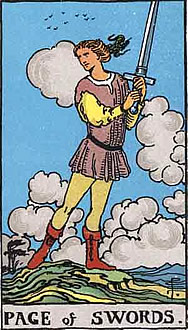
The Page of Swords
Youth if not in age then in spirit. Adept at diplomacy.
Mannaz
Now is the time for you to explore your inner self and those of others. Your intelligence and creativity are very well honed at the moment. Cooperation from and with others should be very easy to attain.
The Food Charm
You must take steps to protect your body from what you ingest. This aspect is affected by a poor diet. You have a bad habit of filling your body with things you know are not good for you.
Your Daily Influences represent events and challenges the current day will present for you. They may represent opportunities you should be ready to seize. Or they may forewarn you of problems you may be able to avoid or lessen. Generally it is best to use them as tips to help you manage your day and nothing more.

Your Animal Spirit for August 1st is The Cardinal

Your Animal Spirit for Today
August 1, 2011

your daily animal spirit for today

Cardinal

Wake up! Cardinal is chirping at you—bringing a message of personal power. Stop shrinking from your destiny. Stop pretending that you are less than. If you are unsure of your path, ask Cardinal to fly with you—it’s certain he will help you focus, gain clarity, formulate a plan, become self-assured, and step out into the world with the confidence befitting a person of your power.

Daily Chakra Levels For Aug. 1st

The Chakras represent the seven primary energy hubs in the body. Life force energy is constantly flowing in and out of these centers. Just as the cosmos is constantly changing, so too are the levels of energy absorbed and radiated by our Chakra centers. The graph below is a representation of the quantities of Chakra energies available today.

Sahasrara:
   
94%
 
   
99%
Vishuddha:
   
69%
Anahata:
   
81%
Manipura:
   
51%
Svadhisthana:
   
89%
Muladhara:
   
68%

Legend:
Sahasrara – The Crown Chakra represents energies associated with cosmic consciousness, spirituality, knowledge, wisdom and inner peace.
Ajna – The Third Eye Chakra represents energies focused on both physical and spiritual vision. Psychic powers resonate from the Ajna Chakra, as well as your image of the Cosmos as a whole (the big picture) and the many nuances that make your journey unique.
Vishuddha – Throat Chakra is the energy center associated with communication and creativity. Your energy to express yourself verbally and creatively are derived from the Vishuddha Chakra.
Anahata – The Heart Chakra’s energy is concentrated on issues concerning your emotions. This energy fuels your power to love, feel compassion and maintain balance between disparate aspects of your being.
Manipura – The Power Chakra provides the energy that fuels our strength of will, individuality and sense of self-worth.
Svadhisthana – The Spleen or Sacral Chakra supplies the energy we use emotionally and sexually. This is the energy used to connect to others.
Muladhara – The Root or Base Chakra furnishes the energy used to create and maintain our foundation. This is the energy that keeps us on firm ground and provides us with the basic skills to uphold a place in the world.

The Planets Now for Aug. 1st

Position of the planets based on Greenwich Mean Time (GMT).
Sun:
09° 11′
in Leo
Moon:
06° 08′
in Virgo
Mercury:
01° 07′
in Virgo
Venus:
05° 09′
in Leo
Mars:
28° 56′
in Gemini
Jupiter:
08° 56′
in Taurus
Saturn:
12° 23′
in Libra
Uranus:
04° 25′
in Aries
Neptune:
00° 17′
in Pisces
Pluto:
05° 05′
in Capricorn
Aspects:
Conjunction: Moon Mercury 5º
Conjunction: Sun Venus 4º
Opposition: Mars Pluto 6º
Opposition: Mercury Neptune 0º
Opposition: Moon Neptune 5º
Opposition: Saturn Uranus 7º
Quincunx: Moon Uranus 1º
Quincunx: Venus Pluto 0º
Semi-Sextile: Moon Venus 0º
Sextile: Mercury Mars 2º
Sextile: Neptune Pluto 4º
Sextile: Sun Saturn 3º
Square: Mars Uranus 5º
Square: Sun Jupiter 0º
Square: Uranus Pluto 0º
Square: Venus Jupiter 3º
Trine: Jupiter Pluto 3º
Trine: Mars Neptune 1º
Trine: Mercury Pluto 3º
Trine: Moon Jupiter 2º
Trine: Moon Pluto 1º
Trine: Sun Uranus 4º
Trine: Venus Uranus 0º
The Sun in Leo
Courage and the force of will are primary influences while the Sun visits Leo. In some, a need for recognition may increase dramatically. An air of friendliness should be pervasive. Socializing and enjoying the good things in life are major themes during the Sun’s time in Leo. Those who are willing to assume leadership responsibilities and risks are likely to be richly rewarded during this period. Those with more aggressive personalities should be wary of becoming too domineering.

Sun Conjunct Venus
Optimism and kindness are likely to be strong. The desire to be liked by others may be quite powerful as well. Some will exude unusual amounts of charm at this time.

Sun Opposition or Square Jupiter
Ambition may swell at this time, which may lead some to over-estimate the power of their position and length of their reach. The need for personal freedom is likely to be high.

Sun Sextile or Trine Saturn
Responsible actions based on a realistic view of circumstances and your own abilities.

Sun Sextile or Trine Uranus
Creative juices should be high at this time. Non traditional thinking is favored.

Moon In Virgo
Affection is likely to be expressed by proactive action. Overt displays of love may be difficult for many to muster. Much of the affection one is shown may looked upon as suspect. Avoid endlessly critiquing yourself and those around you.

Moon Conjunct Mercury
Searching for the psychological triggers of one’s behavior and desires may be in order. A need to better understand our species place in the scheme of things is also likely.

Moon Sextile or Trine Jupiter
Now is an excellent time to mend past grievances. Sincerity and warmth will serve one well.

Moon Opposition or Square Neptune
Generally it is best to avoid confrontation during this aspect. Many are likely to find the arts very attractive during this period. Exploring one’s dreams and fantasies may be used as a way to avoid confronting life’s crueler moments.

Moon Sextile or Trine Pluto
Passions are likely to run high during this aspect. Exploring the world’s mysteries may be a very attractive pursuit at this time.

Mercury In Virgo
Paying attention to details will lead to sound, efficient solutions. Practical approaches to challenges are favored. Actual progress may be a bit slow in coming, because there will be a tendency to not put plans into action until every possible consequence is weighed.

Mercury Sextile or Trine Mars
Persuasion through verbalizing sound ideas is a key to success during this aspect. Be wary of becoming dogmatic and verbally domineering.

Mercury Opposition or Square Neptune
This aspect favors those with a rich imagination. Those possessing psychic abilities are likely to be at the peak of their powers.

Mercury Sextile or Trine Pluto
Seeking answers to “hidden truths” is likely to produce positive results during this aspect.

Venus In Leo
Doubts about the validity of “true love” are likely to be stirring one’s private thoughts. Making connections with others could be challenged by creating unrealistic expectations that others cannot possibly meet.

Venus Opposition or Square Jupiter
This aspect is likely to bring out the giving side of many. Tolerance of others as well as the need for a great deal of personal freedom are prominent themes at this time.

Venus Sextile or Trine Uranus
Be wary of unusually strong emotions that develop during this aspect. It’s likely they will pass quickly.

Mars In Gemini
Short term projects are favored. The tendency to take on more than one project at a time could be strong, and should be managed to avoid taking on more than can be done. Mental labor is favored over physical labor.

Mars Opposition or Square Uranus
Physical and mental energies are likely to be high during this aspect. The drive to attain goals will be so strong in some that their behavior will become obsessive. Short term projects are favored.

Mars Sextile or Trine Neptune
This aspect favors transforming lofty ideas into useful realities.

Mars Opposition or Square Pluto
This aspect favors those who put the full force of their will into reaching their goals. During this time it would be wise not to share one’s plans and ideas with a broad audience.

Jupiter In Aries
Material gain and lifestyle security will be strong influences during this period. Many may take life much more seriously than they usually do. Tackling challenges from a practical approach is likely to yield positive results.

Jupiter Sextile or Trine Pluto
Visions of what is possible on a grand scale are likely during this aspect. Those who set their goals according to their current vision are likely to do well.

Saturn In Libra
Intimacy may be more of a chore than a pleasure. Some will find their progress towards strengthening intimate bonds and attaining goals muted by feelings of inadequacy.

Saturn Opposition or Square Uranus
Those who aren’t afraid of a little hard work are favored by this aspect. Remaining focused and taking things seriously are likely to produce substantial rewards. The ability to quickly change to stay atop rapidly evolving circumstances is a very valuable asset at this time.

Uranus In Aries
The astrological influence of Uranus is measured in increments of 7 years. What this means is that the effects of Uranus influence an entire generation. Day to day the Uranian influence may be imperceptible, but when the period is viewed as a whole the impact of Uranus is likely to be strikingly apparent.

Iconoclasm, independence and self-sufficiency are likely to be major themes during this period. Traditional values will be challenged. Those with a pioneering spirit will flourish.

Uranus Square Pluto
A mental restlessness and the need for complete personal freedom are possible influences of this aspect. In some the need for total autonomy may be so strong that they will challenge any attempt to subdue their independence.

Neptune In Pisces
Because Neptune takes approximately 14 years to move across Pisces its day to day influence may be imperceptible, but when the period is viewed as a whole the impact of Neptune in Pisces is likely to be strikingly apparent.

Gentleness, creativity, and the pursuit of spiritual truth are strong influences at this time. Many may find mysticism and unorthodox religions very attractive.

Neptune Trine Pluto
The exploration of spiritual issues is favored during this aspect. Introspection should lead many to better understand the underlying motives behind their behavior.

Pluto In Capricorn
Because Pluto takes approximately 15 years to move across Capricorn its day to day influence may be imperceptible, but when the period is viewed as a whole the impact of Pluto in Capricorn is likely to be strikingly apparent.

Strong economic gains can be made during this period. Pluto in Capricorn favors those who are able to make logical decisions and devise pragmatic solutions to the challenges before them.