Pagans Need to Stop Caring About What Other People Think

Pagans Need to Stop Caring About What Other People Think

Author: Clever Brian
It is sound advice in every aspect of a healthy adult’s life: you’ll never be happy, satisfied, or even comfortable if you spend your whole life trying to please others. The only mind you can know, let alone change is your own. Life is short and the only way you can really make the best of it is under your own rules for your own reasons.

I think that a lot of people explore religious alternatives for that very reason. If you are of a character that needs to believe in the Divine in some form or another, but you don’t like to be told what to do or how to think, it’s only natural that you start looking for a set of beliefs that conform to your values and experiences. Paganism offers people a very loose framework where they are free to choose the images and practices that suit them, and have those choices respected in their religious community.

But for all the independence that is innate in choosing a Pagan spiritual path, there is something about the Pagan religious community that engenders a fear of what the religious mainstream thinks about it. Rituals have been bowdlerized, books made obscure, mysteries lost, and compromises made in order to appear “legitimate” in the eyes of the larger religious community.

The unease with the word “witch”, the endless vacillating over skyclad (nude) rituals, the disappearance of the fivefold kiss, the mass publication of “great rites” that are vapid symbolic plays without any context, horror at suggestions of using pain or self-flagellation in rites, the glossing over of the use of drugs in magic… they are all symptoms of the same impulse: The need to make Paganism and Wicca seem friendly and harmless to the mainstream culture.

It isn’t doing us any favours, nor should it. The message it really seems to send is that Pagans are happy to compromise on their beliefs, or that they aren’t truthful with outsiders about them.

Certainly there have been plenty of “Satanic Panic” conspiracy theorists that are happy to point out the inconsistencies from text-to-text and group-to-group to suggest that there are some secret inner teachings, and the public face Pagans present is a pack of lies that are there to suck in the unwary. Consider Steve Russo’s What’s the Deal with Wicca? as a prime example.

Another consequence comes from the bowdlerization of Paganism in the name of maintaining a friendly public face: the watering down of the Pagan religious experience. Many Pagans of my generation learned their practices from the books available at major bookstores. The watered-down rituals, noncommittal attitudes, and dancing around several major issues leads to a watered-down religious experience. For every practising Pagan I know who enjoys a rich religious and spiritual life, I know two who gave it up, because it seemed hollow and meaningless. In my conversations with the latter group I often discover that they were turned off by what they saw as a lack of relevance and meaning to it, or the endless political positioning that happens within the Paganism they learned from the bookshelves of Coles.

Let’s face the bare-bones facts: Wicca started as a sex-cult among a group of wild young actresses and society ladies in Britain. It was a modern mish-mash of Hinduism, Platonic philosophy, Celtic/Nordic folk traditions, magical spells borrowed from medieval manuscripts, and a very modern form of worship of old gods. Gardner then interpolated touches of the Sexual Rebellion ethic and “Babalon” workings from Crowley’s Thelema.

It was a wild, exclusive party that was thick with occultism and dripping with earthy sexuality. There are compelling arguments to suggest that either it grew because of a fluke burst of interest, or as a part of a scheme to provide a massive recruiting ground for the O.T.O., while pushing their sexual liberation agenda ahead.

It included naked worship, sex rituals, self-flagellation, and heavy use of alcohol, suggestions of partner-swapping, and openness to experimentation with drugs. There was no ethic against black magic, just the warning that what you do becomes who you are hidden in cryptic and theatrical language. Their were also tiers of initiation into mysteries borrowed heavily from Rosicrucian/Masonic/Golden Dawn – type sources, that were intentionally not offered to beginners, because some things simply have to be learned with experience, not told.

These are evident; they are our roots, and there is absolutely no use in sweeping them under the carpet.

These things probably don’t appeal to every Pagan, and they are perfectly welcome to take what they want and leave the rest. But should we care that Christians will have none of it? Should we worry if the mainstream media paints us as kooks, or a pack of lusty black-clad teenagers?

Truthfully, I can’t see why we would. Especially not given the damage we are doing to ourselves in the process.

The nature of the human thought is such hat we can never be persuaded of something unless we want to be. You have to choose to have an open mind going into a debate before you can possibly change it. If a person is absolutely set in their beliefs, and those beliefs include either A) that you are evil/insane/damned or B) that you are misguided and need correction, you will never get them to think well of you no matter what you do.

We can scream about not believing about Satan until we are blue in the face, but an Evangelical who is convinced that we are devil-worshippers simply will not be dissuaded from that belief without some immensely grand gesture. And unless that person is a loved one, why would you want to bother?

If a person is dead-set on accusing us of eating babies, do we really even want to give them the time of day or the attention they are so desperate for? And do we want to deal with the idiots who would believe such an absurd claim, either?

Moreover, this crusade for legitimacy has often put pagans at odds with others’ right to religious freedom. Pagan voices have strongly supported attacks on religious monuments in government buildings, openly attacked other people’s belief systems, and the right to practice them. I have personally witnessed Pagans put excessive amounts of energy into berating or limiting the freedom of groups like The First Church of Satan, who in many ways Pagans have more in common with than they ever will with mainstream religion.

It is a fact that we live in societies that remain overwhelmingly Christian. Christian iconography, language, and morals pervade our everyday speech our attitudes, our behaviour and our expectations. The voices of Christians will remain dominant for some time. Religious Chauvinism, the assumption that everyone else is Christian, or that people who aren’t Christian are ignorant and deluded is an inevitable byproduct of our society. Our own apologetics and attempts to make ourselves acceptable to Christians in many ways only prolong this chauvinism in our society.

I propose that we have to learn to simply ignore it, as many varieties feminists have learned to ignore male chauvinists; by assuming they are not worth your time so long as they aren’t interfering with you or others around you. Why bother with people who have such deep-entrenched ideas, what is there to gain out of it?

Of course, this does not mean we should not call “Bullsh*t!” when a person does interfere with a Pagan’s right to practice his or her religion. It is one thing to lightly bandy about the idea that America, Canada, and Britain are “Christian” countries. It is even true, interpreted in a few different ways. It is another to use that as the basis for passing laws that ban certain practices or give special economic advantages to Christian groups. It is one thing to ignore the ignorance; it is another to ignore ignorant action.

In these cases, though, it is better to stop worrying about what the legislator, basher, or bigot has in mind. Reading minds is hard, and inexact work, and changing minds nearly impossible. There is no gain to be made in educating these people. The only place that such actions can be countered is where you are in the same playing fields. Cite your constitutional rights, take people to court, use words to denounce the action (not argue with its author) , and in the case of brutality, answer it with appropriate measures of self-defence.

So long as we insist on holding to our principles as a society, the Constitutions and Human Rights movement will continue to put us in the right. And when those no longer can avail us, look around, because there will be a revolution in the streets you’ll be able to join.

In the end, the continued push to care about what others think will only make use self-censor waffle, and waver further. It will push away people who come looking for a meaningful religious experience, and it will cost us our identity as a religion and as a people… and it will do so without giving us any gains in the cultural arena.

It is far better to maintain a frank openness and honesty to anyone who is willing to take the time and research, or to find a Pagan and simply ask a few direct questions, than to try to persuade the whole world. And for the people who don’t like what they see when they explore Paganism, there are plenty of other faiths, they will find one they like eventually, that is not our affair.

This press for acceptance is also, on another level, incongruous to the position of total freedom that Paganism offers. We cannot really follow the injunction to ‘Do what thou wilt, ” if we are always looking for signs of disapproval in others. That would be bending our ‘doing’ to someone else’s ‘willing.’

Burning ‘The Burning Times’

Burning ‘The Burning Times’

Author: Zan Fraser

It seems that there is a recent body of misinformation regarding the Burning Times making its way through the Wiccan/Pagan community, which amounts to a revisionist “take” on the Witches’ Holocaust. Being something of a debunking, this new school of thought asserts that the Burning Times is “over-hyped” and hysterically blown out of proportion. While as a rule, I am a huge fan of revisionist history, I find this development (which adds up to a sort of “Burning Times denial-ism”) a bit depressing.

Proponents of this new school of thought seem to me mistaken in a number of important ways. (1) They tend to describe the Burning Times as a sort of invention of Margaret Murray’s, the Egyptologist whose “pro-Pagan” interpretation of European history was so influential to the early Craft revival. (2) They challenge the conventional belief in huge numbers of Burning Times victims as overwrought, with the numbers inflated. (3) They question the interpretation of the Great Witch-Hunts as a “War on Women.”

Far from being a concept of Murray’s, among the broadest reaching of her theories, the first realizations of the Burning Times emanate centuries before her writing, expressed in horror by the period’s contemporaries. As early as the 1560s, Weyer was publishing denunciations of the excesses of German Witch-Hunting; Spee (confessor during the Wurzburg trials of the 1620s) , theology professor Meyfarth (in the 1630s) , and Junius (a torture-victim who generated one of the few Witch-Hunting documents told from the perspective of the tortured Witch) powerfully describe the hysterical panic of the populace and the agonized suffering of the accused. They leave no doubt as to the alarm and trauma that must have pervaded the German regions in the latter 1500s and early 1600s.

Burning Times revisionists make the vital point that the German cases (for their exceptional violence and cruelty) give us a skewed picture of the Hunt Periods. In the 1620s alone, some 600 persons were said to have been killed as devil-worshipping Witches at Bamberg, with some 900 more in Wurzburg. There are many reasons for this, notably that the German Prince-Bishops ruled as absolute authorities on both the secular and religious levels, and the particular Prince-Bishops during this period and in these regions appear to have been especially sadistic sorts. These numbers may be inflated to a certain degree (they probably don’t have a modern bureaucratic accounting system to keep track of such things) , but they clearly intend to describe large numbers of victims, with much resulting social terror and disruption. Revisionists are correct to point out that these levels of destruction are not matched elsewhere and tend to provide a somewhat distorted view of the Witch-Hunts.

(On more than one occasion, I have heard Wiccans describe the “Burning Times” in England as if the English Witch-cases were on a par with those of Germany, or to relate how English Witches “fled the Burning Times in England, ” to come to the New World of America in order to keep the “Old Ways” in safety. This ignores the reality that the English were relatively lenient in their regards to Witchcraft. Importantly they never accepted the idea of Witches as demonic- sparing themselves the hysterical “Satan panic” reactions experienced on the Continent- and they observed legal proprieties in their judgment of Witch-cases, as opposed to the German regions, which held Witchcraft to be such a subversive and lethal instrument that it justified abandoning basic legal protections for the accused. In an important difference, the English did not employ torture in Witchcraft cases.

This is not to say that on the social level the English never responded hysterically to fears or accusations of Witchcraft or that there were not English miscarriages of justice- but it is to say that the English made an effort to hold themselves in check regarding Witchcraft, which makes the Burning Times period in England of a different character than that in other parts of Europe.)

Conceding the point that the extreme degree of persecution in Germany leaves a lop-sided impression, it should be remembered that even in England, Reginald Scot was so alarmed over what he saw as the rise of “anti-Witch” prejudice that he published Discoverie of Witchcraft in 1584, decrying the stereotyping of elderly ladies as Witches (the English overwhelmingly imagined Witches to be elderly single women) ; according to Scot, this exposed defenseless old women to acts of violence. In A Briefe Historie of Wytches, , I collect from the period-drama several examples in which assault is thought justifiable if its victim is imagined to be a Witch.

In Sweden, Queen Christina was so dismayed over Witch-Hunting in her realm that in 1649 she ordered a series of reforms; this is the one instance in 300 years in which a European monarch so used the royal power, which Robbins finds “notable as the first legislation curbing witch hunts.” (Rossell Hope Robbins, The Encyclopedia of Witchcraft and Demonology, “Sweden, Witchcraft In”) In all of these cases, the individuals involved- Weyer, Spee, Meyfarth, Junius, Scot, and Christina- are identifying “Witch-Hunting” as a feature of life around them, expressing the first glimmerings of understanding that they were living through a “Burning Times.”

In the early 1800s, the famous novelist Walter Scott was studying the Scots Witch-cases, publishing his summaries in Letters on Demonology and Witchcraft. The eminent Wilhelm Gottlieb Soldan conducted another early scholarly review of the medieval Witch-Business, presented in 1843; this was followed by the majestic history collected by Joseph Hansen, published in German in 1900. We see here that identification and study of the Burning Times commenced well before Margaret Murray, who first published in the early 1920s.

One of her initial critics, Harvard professor George Lyman Kittredge, issued his fine volume Witchcraft in Old and New England in the latter 1920s. Although he hardly agrees with Murray, it is clear that the Burning Times is “set” in his mind as a historical phenomenon (p. 243) : “Such were the orgies of the Witches’ Sabbath as systematized in the fourteenth and fifteenth centuries by the scholastic ingenuity of devout theologians and described in confessions innumerable wrung by torture from ignorant and superstitious defendants in response to leading questions framed by inquisitors who had the whole system in mind before the trial began.”

I believe that- far from being among Margaret Murray’s “theories”- the medieval Burning Times is indeed a well-documented and reasonably well-understood phenomenon.

Another assertion made by the promoters of this new reading of the Burning Times is that not really very many persons were killed. They will quite properly dismiss the hysterically overwrought 9 million citation, then quote “recorded data” as giving an extremely paltry number, with “many countries” reporting only 3-10 victims, or certainly less than 50.

I find Anne Llewellyn Barstow to be persuasive on the issue of numbers: Witchcraze: A New History of the European Witch Hunts Pandora Books, 1994 (p. 19-23) . Acknowledging the woefully imperfect state of records (many lost or defective) , Barstow nonetheless finds herself compelled to keep careful count as she works her way through the dim documentation of the past. Although this pains-taking approach adds hours of extra work, and great though the temptation is to start rounding off numbers, she retains “each awkward figure, ” remembering Holocaust historian Joan Ringelheim’s observation: to drop numbers now was to kill that individual twice. Accordingly Barstow provides in her Appendix B “the most complete record available at this time.”

Barstow comments upon Levack’s work (p. 22) , crediting him with producing the “most careful totals made so far.” She finds his figures “reasonable, ” but “almost certainly too low.” Given the faulty state of records, with additional cases emerging “steadily, ” and given that posse-style murders and lynching-deaths will not be recorded, Barstow finds it judicious to expand Levack’s numbers to 200, 000 accused, with 100, 000 dead. She finds it interesting that- just after the “recently ended holocaust”- Voltaire estimated that about 100, 000 had been put to death.

Contrary to the assertion of Burning Times revisionists that “many countries” had less than 50 Witch-Victims apiece, Barstow’s Appendix B describes only Montbeliard (55+) , Vaud (90) , Labourd (80) , Champagne (50+) , Essex (74) , New England (35) , Estonia (65) , Russia (10+) , Logrono (6) , Catalonia (45) , and Navarre (50) with less than 100 murdered Witches. She finds some 50, 000+ to have been killed in the German states; some 5000 in France; some 1000 in England; 1, 337+ in Scotland; 1500-1800 in Scandinavia; and approximately 15, 000+ in Poland.

The third claim of this would-be up-ending of conventional Hunt-Period consideration is that in “many countries” the “vast majority” of victims were male. Scandinavia, Finland, and Iceland are listed as places where “nearly all of the accused” were men. From this, the interpretation of the medieval Witch-Hunts as a “Holocaust of women” is questioned.

Barstow notes that the trials in Finland, Estonia, and Iceland (“which did not have a true witch hunt”) offer the “rare phenomenon” of predominantly male Witches. (p. 86) Finns had traditionally presumed sorcery to lie with men and some 60% of Estonia’s accused were males, often with reputations as healers or magic-workers. (Barstow, by the way, notes that Witchcraft in Scandinavia and the Baltic regions- the areas isolated from Christianity the longest- is “deeply rooted in European folk customs”; Robbins observes that “heathen beliefs in natural and magical powers” lingered in Finland longer than anywhere else in Europe, as Christianity was not introduced until 1157. (Encyclopedia, “Finland, Witchcraft in”)

Interesting though that is, male Witches appear to be the exception rather than the rule. Barstow remarks that the figures show women to have been “overwhelmingly victimized, ” constituting roughly 80% of the accused and 85% of the executed. (p. 23) In places such as Essex, females make up 92% of the accused, as they do during a Hunt in Belgium. During a Scare in Basel, the percentage of women accused shoots to 95%. Barstow quotes the observation of historian Christina Larner, “the chronicler of Scottish witchcraft, ” who felt that there must have been periods in East Lothian or Fife when no woman could have “felt free from the fear of accusation.” She notes the two German villages finally left with but one female inhabitant apiece, and the Rhenish village where one person (generally female) out of every two families was killed. (p. 24)

Barstow feels that her statistics “document an intentional mass murder of women.” To not see that is to “deny the most persistent fact about the persecutions.” (p.26)

Burning Times revisionists conclude that the Burning Times is a farce, a “theory” of Margaret Murray’s run amuck, fed by pumped-up numbers and a hysterical view of a “Holocaust of Women.”

With all respect, I feel that:

(1) The Burning Times is established as a medieval phenomenon well beyond Murray.

(2) Anne Llewellyn Barstow provides extremely well-researched figures, pointing to some 200, 000 accused, with some 100, 000 executed, around 85% of whom were women.

(3) Far from men being the primary victims during the Burning Times (Iceland, Finland, and Estonia notwithstanding) , I believe that so many women were targeted that the Burning Times might well be understood as a Religious War on Women- predicated upon the interesting assumption that Witches are most likely to be Female.

It is for this reason that one of the rallying cries of the Modern Wiccan Witchcraft Revival is: Never Again the Burning Times.

“You Lied!” Some Thoughts on Honesty and Pagan Practice

“You Lied!” Some Thoughts on Honesty and Pagan Practice

Author: Bronwen Forbes

When I first began to formally study Paganism, it was drilled into my head over and over: “A witch is only as good as his or her word.” In other words, there is a direct relationship between the quality and effectiveness of your magick and how good you are at telling the truth and keeping promises.

Which makes sense, when you think bout it, because say, for example, you are doing a working to find a new job and you promise Hestia that if you get a job you will volunteer so many hours a week a the local soup kitchen in Her name. Then suppose you promise your friend that you will meet her for lunch and something better comes up and you break your promise to your friend. Why, then, if you don’t keep your word to your friend should Hestia have any reason to believe you’ll keep your promise to her? Odds are you won’t get that new job if Hestia has anything to do with it.

This is partly a matter of will. If magick is, as some say, “change in accordance with will, ” this implies t hat a person’s will is pretty important. And a major component of will is the strength to do what you say you will do – no matter how hard that may become. If your word is good, chances are your will and your magick will be pretty strong.

I was also taught that it’s okay to lie if it’s a matter of life and death. I would say: evaluate the situation very carefully before choosing to lie “for the greater good.” Let me give an example. About eight years ago I was a very busy volunteer with a local no-kill animal rescue organization. I was also – and still am – totally, utterly and completely smitten with beagles.

So when I saw a miserable shy little beagle on our town’s high-kill Humane Society’s web page, I leapt into action. I tried to adopt Joe the Shy Beagle, stating openly that I was a volunteer with the no-kill rescue group. The folks at the Humane Society wouldn’t let me have him, stating that they were afraid I’d just turn around and adopt him out to someone else. We went back and forth on this issue for a few days while Joe cowered in the back of his cage. Meanwhile, the clock ticked down to the day that Joe was scheduled to be euthanized. And since no one wants to adopt a dog that’s literally paralyzed with fear (except me, apparently) , I was running out of time if I wanted to save Joe’s life.

So I lied.

I told the staff at the Humane Society that my husband had completely fallen in love with Joe and we now wanted to keep him. And a day later I brought Joe home. Within a month I’d sent him to live with my mother after he freaked out because the neighborhood kids had gone a little overboard with Fourth of July fireworks. He’s been with my mother ever since.

Did I do the right thing? On the surface, yes I did. I deliberately lied – and made my husband lie – in order to save an animal’s life; an animal, I should add, that my mother loves very much. For years I used this example to teach my students to think about their actions and the ethics of those actions. I was actually proud of the fact that I’d saved Joe’s life and cited the whole incident as an example of “harm none; all life is sacred.”

Except there’s more to the story. My family currently lives with my mother, which means we live with Joe. Beagles are, in general, cheerful, outgoing, friendly, cuddly, happy little dogs. Eight years after I pulled him out of the back of his cage at the Humane Society, Joe is still none of these things. He cowers, snarls at the other dogs, and (most disturbingly) if startled by motion four or five feet away, snaps at my five-year-old daughter (who was raised with dogs and knows how to behave around them) . It’s only a matter of time before he bites her. Joe is also slowly dying of stress-related health issues.

Had I not lied to the Humane Society staff all those years ago, Joe would have lived a few more days and been humanely euthanized by a painless overdose of barbiturates. But I did, and now I get to watch a desperately unhappy dog take years to die by inches – and possibly do serious damage to my child before he goes.

Did I ultimately do Joe any favor? In my opinion, no. Have I done him harm? Absolutely. And that, gentle readers, is bad magick.

There are also less painful, more practical spiritual reasons to keep your word and live as truthful a life as possible. For example, if you aspire to join a British Traditional or a British Traditional-based coven, you’re going to be expected to swear at least a few oaths. And these groups take these oaths pretty seriously. In other words, if you’ve developed a reputation in the community for being flaky about commitments or gossiping (breaking your word) spreading wild stories or inventing training/lineage credentials (lying) or you’re just generally an all-around unreliable person, you’re not going to be invited to join an oath-taking group. Of course, even if you’re not interested in joining a traditionally-minded group, it would still be nice not to have a bad reputation in the community, wouldn’t it?

On the other hand, and completely tongue-in-cheek here, the “white lie” rules that apply outside the Pagan community apply here, too. In other words, if anyone of any gender asks you, “Does this robe make me look fat?” your best option is, of course, to say no!

But in all seriousness, being as truthful as possible can only make you a better practitioner, a better covener, a better community member, and an all-around better person. We need more of those. I think Joe the Beagle would agree.

Psychic Tip of the Day for April 19

Psychic Tip
of the Day

Tuesday, April 19, 2011

ASKING FOR IT
The Sun, ruler of our human ego, is now in the zodiac sign of Taurus. This is the sign of money and stubborn values. Look for a relationship to suddenly emphasize the material world. Is it time to ask about a ring?

Today’s I Ching Hexagram for April 19

Today’s I Ching Hexagram for Everyone:

57: Gentle Penetration

Tuesday, April 19th, 2011

Hexagram 57

General Meaning: The general situation here points to subtle penetration. Reeds bend softly in the wind, symbolizing flexibility and endurance, symbolizing quiet, relaxed effectiveness in action. A gentle influence is at work, but just as the wind is ceaseless in its efforts, so too small forces can persist to produce lasting results.

Gentle penetration bodes well for new relationships of all kinds. Just as a summer breeze slowly penetrates the woods to cool the forest, the brilliant ideas of gifted leaders or the sincere feelings of warm-hearted lovers slowly penetrate the minds and hearts of others. In personal relationships, a gentle beginning is often linked to a long-lasting union.

When employing a force that is weak but persistent, careful aim is necessary, for only when a small force continually moves in the same direction can it have much effect. In human affairs, this kind of influence comes more through strength of character than by direct confrontation or seduction. It’s important to have, and stick to, clearly defined goals. Maintaining a strong vision and following a steady course of least resistance often brings good fortune.

Your Daily Number for April 19th: 5

Your Daily Number: 5

Work-related travel is possible today, and good long term connections are likely to be made. You may dream up some very worthy money saving ideas, but hold off on sharing them with others until later. Today is an excellent day to focus on business.

Fast Facts

About the Number 5

Theme: Resourceful, Adventure, Speculation, Travel
Astro Association: Taurus
Tarot Association: Hierophant

Today’s Tarot Card for April 19th

Today’s Tarot Card for Everyone:

Strength

This Tarot Deck: Angel Tarot

General Meaning: What has traditionally been known as the Strength card represents Nature which, however wild in its primal form, is tamed by our subtler, finer (feminine, interior) self. The will and passion of our instinctive nature does not need to be broken, but refined and brought to consciousness — so that all levels of Creation, inner and outer, may come into harmony.

The feminine soul-force contains a persuasive power that can nurture and induce cooperation from others, stilling disruptive energies by harmonizing differences in the spirit of collective good will.

Your Daily Horoscopes for April 19th

General Daily Horoscope


It’s tough getting our thoughts across as messenger Mercury slows to a crawl, ending its retrograde period on April 23 and heightening the lingering stress we feel from yesterday’s frustrating Mars-Saturn opposition. But bottled emotions can reach a flash point now as Mercury hooks up with contentious Mars. However, losing our cool may not fix anything because the intense Scorpio Moon wants us to handle the real issues and not just the symptoms.


Aries Horoscope
Aries Horoscope (Mar 21 – Apr 19)

Although you may have to face a deep-rooted fear, you’re willing to discuss a difficult issue today. Unfortunately, your good intentions don’t necessarily mean that you’ll get to the heart of the matter. Your goal is admirable, but you can appear so thoroughly engaged in the conversation that no one notices you’re just putting up a smokescreen to prevent others from getting past your defensive shell. Share your truth with someone you trust to avoid feeling isolated.

 
Taurus Horoscope (Apr 20 – May 20)

Your co-workers and friends can be too intense for your taste today, but you can’t just ignore them. Your sense of loyalty enables you to interact with others on equal footing, but your dissatisfaction grows until you suddenly say what’s on your mind. Don’t be too hard on yourself for your emotional outburst; it’s healthier to get your feelings out into the open sooner than later.


Gemini Horoscope
Gemini Horoscope (May 21 – Jun 20)

You can surprise others with your unflappable determination today, and could do such a good job that they cannot help but take notice of you. Meanwhile, you might be secretly trying to avoid the spotlight now, tempting you to give out mixed messages. Although your key planet Mercury is receiving an energetic boost from Mars, it’s really not about what you say; it’s more about what you’re not saying. Think twice prior to hiding something you might be better off sharing.


Cancer Horoscope
Cancer Horoscope (June 21 – Jul 22)

Your need for a deep emotional attachment is magnified today by the Moon’s visit to passionate Scorpio. However, you might try to cover up your vulnerability by confronting someone about something that’s completely unrelated. Fortunately, sharing a romantic inclination can open up new avenues of communication. But don’t push too hard; for now, find satisfaction with whatever happens.


Leo Horoscope
Leo Horoscope (Jul 23 – Aug 22)

You could be more self-protective now than anyone realizes, but your social veneer makes it look like you’re fully engaged in your relationships. People close to you may be impressed with your optimistic demeanor, however, you may be reliving unexpressed hurt that continues to be recycled in your life. For now, there’s no reason to change your behavior; it’s okay to dance between two positions. Thankfully, you will be able to meld these disparate realities with time.


Virgo Horoscope
Virgo Horoscope (Aug 23 – Sep 22)

You prefer that no one messes with your schedule today because you know exactly what should be done and just want to get on with it. You aren’t happy wasting any time having to explain yourself to others. Nevertheless, it isn’t smart to alienate your friends and family. Seek ways to maintain your focus without cutting yourself off from the love and support that’s available to you now.


Libra Horoscope
Libra Horoscope (Sep 23 – Oct 22)

Sometimes you are so gracious that you can appear more easygoing than you actually feel. However, today you’re feeling uncharacteristically selfish. It isn’t that you are antisocial; it’s just that you don’t want to put up a phony front for the sake of making others feel better. Don’t try to justify your actions; just be true to yourself while remaining kind to everyone else.


Scorpio Horoscope
Scorpio Horoscope (Oct 23 – Nov 21)

It can be rather challenging to deal with your own powerful emotions now that the Moon is back in formidable Scorpio. Thankfully, you can transform your difficult feelings into a vision of hope. Sharing your dreams for the future can be quite inspiring to others, which in turn ultimately improves your mood by making you feel more positive about yourself.


Sagittarius Horoscope
Sagittarius Horoscope (Nov 22 – Dec 21)

Today’s Sun-Mercury conjunction falls in your 5th House of Self-Expression, inspiring you to use your motivational gifts. Although your words often help others to be more confident, your over-the-top exuberance now could also be a bit intimidating. There’s no need to drive your point home with extra intensity; just share your perspective and then give your friends and associates enough space so they can assimilate the possibilities at their own pace.


Capricorn Horoscope
Capricorn Horoscope (Dec 22 – Jan 19)

Acknowledging your extreme reactions to your friends can actually improve your relationships with them, while hiding your feelings could create unnecessary tension. Fortunately, a solid friendship will almost always withstand the truth. Don’t withhold what’s on your mind today; ultimately, your good intentions will prevail over the temptation to rationalize away your integrity.


Aquarius Horoscope
Aquarius Horoscope (Jan 20 – Feb 18)

Passing the time with your co-workers or friends today can be an uplifting and motivational experience. Although there could be a few tricky turns to the conversation, the process of sharing may be exactly what you need to overcome your current negativity, especially if you have recently slipped into a bit of a slump. But this isn’t about being logical; you don’t need to justify anything now. Just open your mind and bask in the camaraderie of your peers.


Pisces Horoscope
Pisces Horoscope (Feb 19 – Mar 20)

Your empathy can be one of your greatest strengths; however, it may also be a source of your current anxiety. Being sensitive to other people’s needs is a blessing unless you can’t set healthy boundaries and turn it off when appropriate. Even if your intentions are good, feeling pain that’s not yours isn’t always helpful. Try to remain positive and then move on; emotional detachment can be liberating to all.


Your Daily Influences for April 18th

Your Daily Influences
April 18, 2011 
 

Tarot Influence

Rune Influence


Charm Influence
Judgement Reversed
The card represents the failure to find happiness, disenchantment, and the loss of possessions.
Dagaz
Dagaz represents the fresh light of a new day. You are close to making a breakthrough. You have the will to change whatever you deem necessary. You may see the world with absolute clarity at this time.
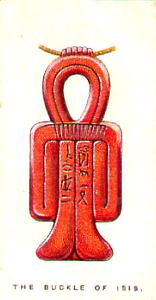
The Buckle of Isis
Someone will, or has told a lie about you regarding this aspect and damaged your reputation in ways that may not become apparent to you for many weeks.
Your Daily Influences represent events and challenges the current day will present for you. They may represent opportunities you should be ready to seize. Or they may forewarn you of problems you may be able to avoid or lessen. Generally it is best to use them as tips to help you manage your day and nothing more.